So you’re getting dental implants, and now your dentist is asking what you want your new teeth made of. It’s a fair question, and the answer changes how your smile feels, looks, and holds up over the years.
For most people, an acrylic-titanium hybrid costs less and is easier to repair, while monolithic zirconia is stronger and resists wear and staining better, so heavy chewers and grinders often do better with zirconia.
That’s the short version, but the full-arch prosthesis you pick should match your bite, your budget, and how long you want it to last. Neither option is universally better than the other.
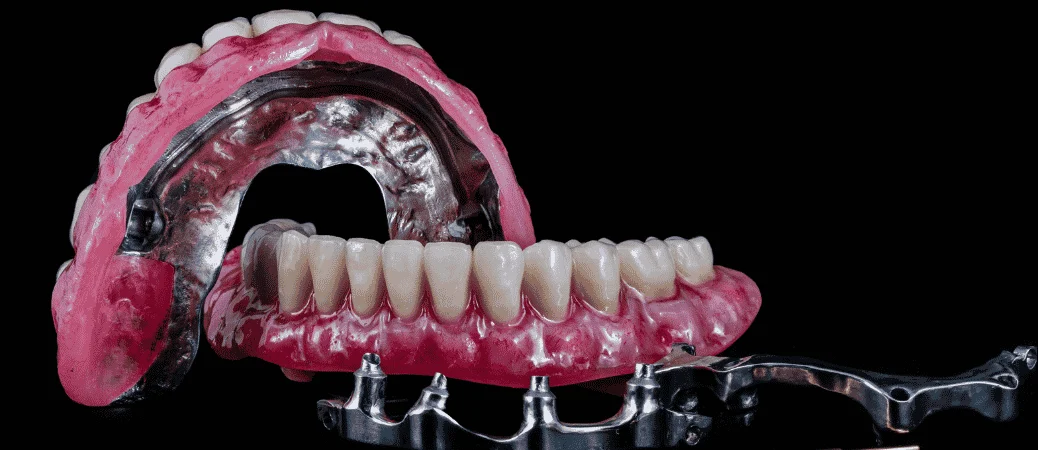
The two designs are built in very different ways. A hybrid uses acrylic teeth attached to a titanium or chrome-cobalt framework, while zirconia is milled as one solid piece.
Below, you’ll see how each one performs day to day, what upkeep to expect, and how to weigh the cost of your definitive prosthesis against the years you’ll get out of it.
Key Takeaways
- Acrylic-titanium hybrids are lighter and cheaper, while zirconia is stronger and more wear-resistant.
- Hybrids are simpler to adjust and repair, but their acrylic teeth wear down faster over time.
- Your bite force, appearance goals, and budget should guide which full-arch restoration you choose.
Table of Content
- The Quick Decision: Which Bridge Fits Your Priorities?
- How the Two Prostheses Are Built
- Performance in Daily Chewing, Appearance, and Wear
- Maintenance, Adjustments, and Repair Expectations
- Treatment Planning, Cost, and Long-Term Value
- Frequently Asked Questions
The Quick Decision: Which Bridge Fits Your Priorities?
Your choice usually comes down to four things: your budget, your bite force, how easily the bridge can be fixed, and how long you want it to last before major work is needed.
Acrylic hybrids are lighter, cheaper, and simple to repair, while a monolithic zirconia bridge gives you more strength, better stain resistance, and a longer service life.
When an Acrylic-Titanium Hybrid May Be the Better Fit
A hybrid prosthesis uses acrylic teeth and pink acrylic gums bonded to a titanium framework. It costs less up front, and future replacements cost less too.
This option often makes sense if you:
- Want a fixed set of teeth but have a tighter budget
- Are new to full-mouth rehab and prefer the lighter weight while you adjust
- Value repairability, chipped or worn teeth can often be fixed or swapped chairside
- Have a restored opposing arch, so wear against natural enamel isn’t a worry
Keep in mind that acrylic stains, and the chewing surfaces flatten over time. Most acrylic hybrids need maintenance over time, which may include repairing or replacing worn acrylic teeth.
When a Monolithic Zirconia Bridge May Be the Better Fit
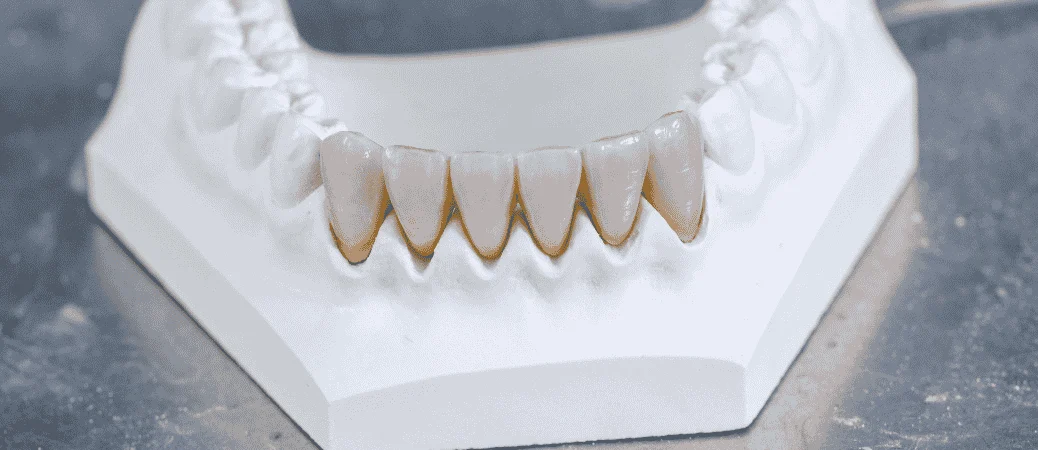
A full-arch zirconia bridge is milled from one solid ceramic block, so the teeth and gum area are the same material. There are no bonded joints that can come loose.
Zirconia tends to be the stronger pick if you:
- Clench or grind, or simply have a heavy bite force
- Want the longest longevity with the least ongoing repair work
- Drink a lot of coffee, tea, or red wine and want better stain resistance
- Care most about esthetics, since layered zirconia can be shaded for translucency
The trade-offs are real. Zirconia costs more than a comparable acrylic hybrid, though most people adjust within days. Repairs almost always need lab work rather than a quick chairside fix.
Why No Single Material Is Best for Every Patient
Durability isn’t the only thing that matters. Zirconia is harder than natural enamel, so if you still have natural teeth in the opposing arch, it can wear them down over time.
Acrylic absorbs shock better and is more forgiving if you bite something hard by accident.
Some patients do best with a mix. Zirconia goes on top, where the smile shows most, and an acrylic hybrid goes on the bottom, where lighter weight feels more comfortable.
Your dentist should walk through your bite history, your opposing arch, your maintenance budget, and whether you’d rather start with acrylic and upgrade to zirconia later.
The right answer is the one that matches how you actually chew, eat, and care for your teeth.
How the Two Prostheses Are Built
The two options start from very different places. One is built up in layers by hand around a metal bar, while the other is milled from a single block of ceramic by a machine.
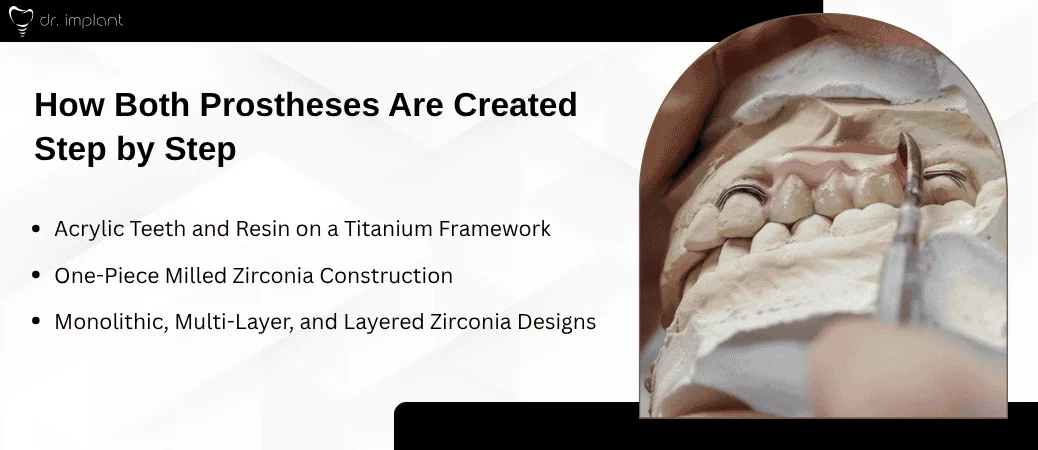
Acrylic Teeth and Resin on a Titanium Framework
Your acrylic hybrid starts with a titanium framework, sometimes called a titanium bar. This metal framework screws directly into your four implants and carries all the chewing load.
A lab technician then bonds individual acrylic denture teeth to that bar and packs pink acrylic resin around them to imitate gum tissue.
The result is a titanium-acrylic hybrid that is lighter, repairable, and lower in cost than ceramic. Modern labs still design the bar with CAD/CAM technology, but attaching the teeth and shaping the resin is hands-on work.
That handmade part is why the acrylic option gives your dentist so much room to adjust shade, tooth shape, and gum contours before final delivery.
One-Piece Milled Zirconia Construction
Zirconia takes the opposite path. The whole bridge, including the teeth, gum areas, and supporting structure, is milled from a single block of zirconia using digital CAD/CAM workflows.
There is no separate metal framework and no glued-on denture teeth. Because the piece is one solid unit, there are no bonded joints that can pop loose.
After milling, the bridge is stained, glazed, and sintered in a furnace at very high heat. Sintering shrinks the zirconia and hardens it, which is why the design has to account for that shrinkage from the start.
The finished bridge screws onto the same multi-unit abutments your temporary used.
Adjustments are harder here, cutting hard ceramic is slower than trimming acrylic, and you cannot simply add material back.
Monolithic, Multi-Layer, and Layered Zirconia Designs
Not all zirconia bridges look the same, and the difference comes down to how color and translucency are built in.
DesignHow it’s madeTrade-off****MonolithicOne uniform block, stained on the surfaceStrongest option; color can look flatterMulti-layerPre-shaded block with built-in gradientBetter natural shading, still one solid pieceLayeredZirconia base with porcelain added on the frontBest appearance; porcelain can chip
Monolithic and multi-layer zirconia restorations keep the strength advantage because nothing is stacked on top.
Layered zirconia bridges look the most lifelike, especially in the front, but that added porcelain is the weak point.
If you grind your teeth, your dentist will likely steer you toward a monolithic or multi-layer design instead.
Performance in Daily Chewing, Appearance, and Wear
The way your bridge feels when you eat, how it looks after a year of coffee, and how it treats your remaining natural teeth all trace back to one thing: the material.
Acrylic-titanium hybrids flex a little and stain a little; monolithic zirconia stays hard, smooth, and color-stable, but it asks for a carefully balanced bite.
Strength Under Occlusal Load and Bruxism
Zirconia has a much higher flexural strength than acrylic, so it resists cracking under heavy occlusal load.
That matters if you clench, since bite forces in the back of the mouth can be strong enough to fracture acrylic teeth or pop them off the titanium bar.
Hybrids handle force differently. The acrylic gives slightly, which can soften peak forces on your implants, but that same softness means chipped or worn teeth over time.
One tradeoff: because zirconia barely flexes, more force travels to the screws and implants.
A study shows that lab modeling suggests zirconia offers better mechanical stability in All-on-4 systems, yet careful occlusion still does the heavy lifting.
If you have bruxism, plan on a night guard with either material.
Translucency, Gum Design, and Long-Term Esthetics
Modern multilayer zirconia has real translucency, so the front teeth catch light instead of looking flat and opaque. Older monolithic blocks looked chalky; today’s shaded discs are far better.
Acrylic hybrids win on gum design. Pink acrylic is easy to shape and tint, which helps when bone loss means the bridge must replace gum volume and support your lip.
Zirconia gums can look slightly more uniform, though a skilled lab adds staining and texture.
Because there’s no veneering layer on a monolithic bridge, you avoid porcelain chipping at the edges, a common complaint with layered designs.
Stain Resistance and Surface Wear
Acrylic is porous. Coffee, tea, red wine, and curry soak in slowly, and the teeth dull as the polish wears off. Most patients need professional polishing at hygiene visits to keep things looking fresh.
Polished zirconia is dense and nearly nonporous, so it resists stain and holds its shine for years. Small scratches usually polish out without changing tooth shape.
Wear resistance follows the same pattern. Acrylic wear slowly flattens the chewing surfaces, which can change your bite height over several years. Zirconia barely wears.
One limit worth knowing: neither material responds to whitening gels, so pick your shade carefully up front.
Effects on Opposing Natural Teeth
If you still have natural teeth or a natural-tooth arch facing your bridge, this is a real consideration.
Situation****What to expectZirconia against natural enamelHighly polished zirconia is gentle; rough or unpolished zirconia can speed opposing tooth wearZirconia against zirconiaVery little wear, but forces are high, balanced contacts matterAcrylic against natural enamelKind to enamel, but the acrylic itself wears down first
The fix is straightforward: your dentist polishes zirconia to a glass-smooth finish and checks contacts at each visit. Both materials are considered biocompatible and won’t irritate healthy tissue.
Maintenance, Adjustments, and Repair Expectations
Both materials need daily cleaning under the bridge and a checkup schedule with your dentist, but they behave very differently when something chips or breaks.
Acrylic-titanium hybrids are easier to patch up in the chair, while zirconia usually means sending work back to the lab.
Cleaning Beneath a Fixed Full-Arch Bridge
Your bridge sits slightly above the gum, so debris collects in that space. Cleaning under it is the single biggest habit that protects your implants.
A water flosser is the tool most patients rely on. Aim the tip along the gum line at a low setting and work from one end of the arch to the other.
Add floss threaders or a thick implant-specific floss to wipe the underside of the bridge once a day. Interdental brushes help around each abutment.
The connection between dental implants and gum disease is also important for long-term maintenance.
Plaque and inflammation around implant-supported restorations can put the surrounding gums and bone at risk, making daily cleaning and regular professional monitoring essential.
Chairside Repairs and Replacement Options
This is where repairability really separates the two materials.
ProblemAcrylic-Titanium HybridMonolithic ZirconiaChipped toothOften repaired chairside with composite or a new denture toothUsually needs lab work or refinishingWorn teethTeeth can be replaced on the same titanium frameWhole bridge may need remakingFractureAcrylic can be rebuiltCracks through zirconia typically mean a new prosthesisScrew access wearSimple to repack and re-sealSimple to repack and re-seal
Acrylic wears down over years of chewing, so plan on tooth replacement or a refresh somewhere around the 5-to-10-year mark.
Zirconia resists wear far better, which is a main reason dentists weigh strength against repairability before choosing.
Occlusal Adjustments, Relines, and Professional Follow-Up
Small bite corrections are normal in the first months. Acrylic offers more adjustability — your dentist can shave, add, and polish quickly.
Zirconia can be adjusted too, but it needs diamond burs, water cooling, and careful repolishing so the surface stays smooth against your opposing teeth.
True relines apply to removable overdentures, not fixed full-arch prostheses. With a screw-retained bridge, gum changes are handled by reshaping the underside or remaking the prosthesis instead.
Plan on professional visits every six months, with the bridge unscrewed and cleaned roughly once a year.
Your dentist also checks screw torque, since loose screws are one of the most common issues with full-arch implant restorations.
Download our Dental Implant Pricing & Information Guide!
Fill Out The Form Below And We Will Email/Text You The Guide Along With A $350 Savings Offer.
The Guide Will Show You
-
Factors That Affect Eligibility -
Dental Implant Options -
Average Pricing -
And More!
Download our Dental Implant Pricing & Information Guide!
Fill Out The Form Below And We Will Email/Text You The Guide Along With A $350 Savings Offer.
Treatment Planning, Cost, and Long-Term Value
Your material choice is tied to your surgery timeline, the number of implants you get, and how much you plan to spend over the next 10 to 20 years. Here’s how those pieces fit together.
Why an Acrylic Provisional Is Common After Implant Placement
Right after implant placement, you usually leave with a temporary acrylic bridge, not your final one.
For patients who previously struggled with loose dentures, this temporary fixed bridge can also provide a more stable way to eat, speak, and adjust to implant-supported teeth.
There’s a good reason for that. Acrylic is light, easy to adjust, and simple to repair while your gums heal and your bone bonds to the implants.
Your bite also shifts during healing. Your dentist can trim, reshape, or add material to acrylic in minutes, which would be much harder with a milled zirconia arch.
Most teams wait about three to six months before delivering the definitive prosthesis. In one six-year study, final restorations were placed three months after surgery.
Think of your provisional as a test drive. You get to check tooth shape, lip support, and speech before anything permanent is made.
How All-on-4, All-on-6, and All-on-X Affect Material Planning
The number of implants changes what your bridge can safely support.
- All-on-4: Four implants, with the back two tilted. This design relies on cantilevers, so the bridge extends past the last implant.
- All-on-6: Six implants spread the load more evenly and shorten the cantilever.
- All-on-X: A general term for any number of implants chosen for your bone and bite.
Zirconia is heavier and stiffer than acrylic. With only four implant positions, some clinicians prefer to place monolithic zirconia on a titanium bar to help spread stress.
More implants often give you more freedom in material choice. Fewer implants may push your team toward a lighter hybrid design.
Balancing Upfront Cost Against Future Refurbishment
Zirconia costs more at the start. Acrylic costs more to keep going.
Published lab fees in one full-arch study ran near $2,000 for acrylic and $5,500 for ceramic. Your total price also depends on surgery, abutments, and whether the clinic uses an in-house digital lab.
Acrylic-Titanium HybridMonolithic ZirconiaLong-term wearMore likely to require refurbishment as acrylic wearsHighly wear-resistant but may be more complex to repairCommon issuesTooth wear, staining, fracturesChipping, screw-related complicationsRepairsOften simpler to repairMore likely to require laboratory work
Acrylic teeth wear down and can crack or discolor over time, so plan on refurbishment or replacement. Zirconia holds shape and color longer, but it has a shorter clinical track record for full arches.
Questions to Review With Your Prosthodontist
Neither material wins for everyone, and the right pick depends on your bite forces and goals.
Ask these:
- Do I grind or clench? Heavy forces change the recommendation, and severe bruxism can rule out some designs.
- How many implants do you plan, and where?
- What happens if a tooth chips in year six? Ask about repair cost and turnaround.
- Will the bridge be milled in-house or sent out?
- How do I clean under it? Plaque control matters, since higher plaque scores in that six-year study lined up with more marginal bone loss.
- What’s the maintenance schedule and cost per year?
Ask to hold samples of both. Weight and feel matter more than most people expect.
Frequently Asked Questions
Choosing between an acrylic-titanium hybrid and a monolithic zirconia bridge comes down to a few practical things: how strong the material is, how much it costs, how it looks, how it feels, and how often it needs work.
Here are straight answers to the questions patients ask most.
Which material is better for an All-on-4 full-arch bridge: acrylic-titanium hybrid or monolithic zirconia?
Neither one wins for every patient. The better choice depends on your bite force, your budget, and how long you want the bridge to last before major work is needed.
Zirconia is the stronger, longer-lasting option, and it resists stains well. An acrylic hybrid costs less, weighs less, and is much easier to fix.
Many dentists look at your grinding habits, your opposing arch, and your goals before recommending one. That’s why the material choice fits your anatomy and parafunction risk rather than a one-size-fits-all rule.
How do acrylic-titanium hybrid bridges and zirconia bridges differ in durability?
Zirconia is milled from one solid block, so there are no bonded joints where teeth can pop off. Monolithic zirconia has a flexural strength in the range of 1,000 to 1,200 MPa, which is why it holds up well for clenchers and grinders.
Acrylic teeth are softer. They flatten with chewing over the years, and they can chip or stain.
The titanium frame underneath the acrylic is very strong. It’s the acrylic layer on top that wears first.
One trade-off with zirconia: it’s harder than natural enamel. If you still have natural teeth in the opposite arch, zirconia can wear those teeth down over time.
What is the cost difference between an acrylic-titanium hybrid and a monolithic zirconia full-arch bridge?
Zirconia costs more. The material itself is pricier, and milling and finishing a solid arch takes more lab time.
An acrylic-titanium hybrid is the more budget-friendly fixed option, which is one reason it’s still an accessible choice for many patients.
Don’t forget long-term costs. Acrylic hybrids generally require more maintenance over time, which may include repairing or replacing worn or damaged acrylic teeth.
Prices vary a lot by city and by how many implants you need, so local cost comparisons are more useful than national averages.
Which All-on-4 bridge material looks more natural?
Modern zirconia usually has the edge. Multi-layer zirconia has translucency built into the block, so the teeth can mimic the way light passes through real enamel.
Acrylic can look very good on day one. The catch is that it absorbs stains from coffee, tea, wine, and tobacco, so the color can shift over the years.
Zirconia also lets the lab customize shade, surface texture, and shape in fine detail. If your upper arch shows a lot when you smile, that extra control matters.
Some patients pick a mix, zirconia on top for looks and an acrylic hybrid on the bottom, where the difference between metal-frame and solid milled designs matters less for appearance.
Is a zirconia full-arch bridge more comfortable than an acrylic hybrid denture?
Comfort is personal, and both feel good once you adjust. Zirconia is heavier, and some people notice that weight for the first few days.
Acrylic is lighter and absorbs shock a bit better, so some patients say it feels closer to chewing with natural teeth. First-time full-arch patients often find the lighter option easier to get used to.
Speech usually adapts quickly with either material. Fit and bite adjustment affect comfort far more than the material itself, which is why both options can deliver strong results for different clinical needs.
How often do acrylic-titanium hybrid and zirconia All-on-4 bridges need repairs or replacement?
Acrylic hybrids need more upkeep. Worn or damaged acrylic teeth may need repair or replacement, while the entire prosthesis may eventually need to be refurbished or replaced depending on wear.
The upside is that most acrylic repairs are simple. A chipped tooth can often be fixed in the chair the same day.
Zirconia is highly wear-resistant and generally requires less routine repair than acrylic. When repairs are needed, the bridge usually has to go back to the lab.
Keep in mind that most All-on-4 plans start with an acrylic provisional bridge on the day of surgery, then move to your final bridge months later. That temporary phase isn’t meant to last, so don’t judge either material by it.
Either way, plan on cleanings every 3 to 6 months and daily home care with interdental brushes or a water flosser.
Screws loosen and bites shift over time, and long-term wear patterns differ between the two materials, so regular checkups catch small problems early.