If you’re staring down a treatment plan for a dental implant, you already know it can be a significant investment.
One of the first questions patients ask is, does dental insurance cover implants, and if so, which parts of treatment may qualify for benefits?
Here’s the direct answer: most dental insurance plans that cover implants at all pay a partial benefit, not half your total bill.
Coverage on paper and money in your pocket are two different things once you factor in waiting periods, annual maximums, deductibles, and exclusions.
Tooth loss doesn’t wait for open enrollment, and implant treatment involves several billable steps, from extraction to the final crown.
Each step may be treated differently by your plan. Knowing where the coverage gaps typically show up can save you from an unpleasant surprise at the billing desk.
Key Takeaways
- Dental insurance rarely covers a full implant; expect partial payment on some treatment steps, not all of them.
- Annual maximums, waiting periods, and missing tooth clauses often shrink the benefit far below what the policy summary implies.
- Medical insurance, FSAs, HSAs, and payment plans can help close the gap when dental coverage falls short.
What Your Plan May Pay for Each Part of an Implant
An implant isn’t billed as one single charge. It’s built from several separate procedures, and your plan may cover some of them while excluding others entirely.
Understanding this breakdown matters because a policy that says it “covers implants” might only mean the crown, not the surgical placement or the post underneath it.
Preparatory work like extractions, bone grafts, and sinus lifts each get their own coverage rules too.
The Implant Body and Surgical Placement
The implant post and surgical placement may be classified as major services under some dental plans.
Coverage varies considerably by policy, and some plans may exclude the implant itself even when other parts of treatment qualify for benefits.
The Abutment and Crown
The abutment and crown sitting on top of the implant may be covered even when the post itself is not. This split confuses a lot of patients, since it means part of your treatment plan gets a benefit and part doesn’t.
Ask your dentist’s office to break out these charges separately when they submit for pre-authorization, so you can see exactly which line items your insurer is willing to pay toward.
Preparatory Care Such as Extraction, Bone Grafting, and Sinus Lifts
Tooth extractions, bone grafts, and sinus lifts may be billed separately from the implant itself, and coverage for these procedures depends on your specific plan.
If additional treatment is needed before implant placement, it can also affect your total out-of-pocket cost.
Sinus lifts, needed when the upper jawbone doesn’t have enough height to support an implant, tend to push costs even higher.
If you’re dealing with significant jawbone loss, it helps to understand how bone loss affects implant planning before you get a cost estimate.
When a Plan Pays an Alternative Benefit for a Bridge or Denture
Some insurers apply what’s called an alternative benefit, meaning they pay only what a bridge or partial denture would have cost, not the implant’s actual price.
You still get the implant, but you’re responsible for the difference between the alternative benefit and your final bill.
This clause catches many patients off guard, since it isn’t always obvious from the plan summary.
The Plan Rules That Can Reduce or Eliminate Benefits
Even a plan that lists implants as a covered benefit can end up paying very little once you account for four common restrictions.
Annual maximums, waiting periods, missing tooth clauses, and network rules each chip away at what actually reaches your bill.

How Annual Maximums Affect the Actual Payout
Annual maximums limit how much your dental plan will pay during a benefit year. Even when implant treatment qualifies for benefits, your plan’s annual maximum may limit the amount paid toward your total treatment cost.
Check both the coverage percentage and annual maximum listed in your policy. Your actual benefit will depend on your plan’s terms, deductible, remaining annual benefits, and the procedures included in your treatment.
Do Waiting Periods Apply to Implant Treatment?
Some dental plans have waiting periods before benefits for major services become available.
The length and rules vary by policy, so check your plan before assuming a newly purchased policy will immediately contribute toward implant treatment.
How Missing Tooth Clauses Can Trigger a Denial
A missing tooth clause can deny your claim entirely if the tooth was lost before your current policy started.
Insurers use this rule to avoid paying for pre-existing conditions, and it’s one of the most common reasons implant claims get rejected.
Ask specifically whether your plan has this clause and how far back it looks, since language varies by carrier.
Why In-Network Providers, Deductibles, and Benefit Years Matter
Network status can affect how your dental benefits are calculated and what you pay out of pocket.
Check whether your plan has different benefits, fees, or reimbursement rules for in-network and out-of-network care before treatment.
Deductibles must be met before major services kick in, and they reset with each new benefit year, which may or may not match the calendar year.
Confirm your benefit year dates so you can time treatment for maximum use of your annual maximum.
How to Read an Evidence of Coverage Before Enrolling
The evidence of coverage documents spells out exclusions, waiting periods, and clause language in detail, far more than a marketing summary ever will.
Look specifically for the words “implant,” “missing tooth,” and “alternative benefit” when scanning this document.
If you can’t find clear answers, call the insurer directly and ask them to confirm implant benefits in writing before you commit to treatment.
When Medical Insurance May Help With Implant Treatment
Medical insurance may contribute toward certain dental or reconstructive procedures in limited circumstances, depending on medical necessity, the reason treatment is needed, and the terms of the medical plan.
Coverage is highly case-specific, so benefits should be verified directly with the insurer before treatment.
What Counts as Medical Necessity?
Medical necessity generally means the implant is needed to restore function or repair damage from an injury or illness, not to improve appearance.
Insurers want documentation connecting the dental work directly to a diagnosed medical condition. Cosmetic tooth replacement, even when it involves an implant, rarely qualifies.
Traumatic Injury, Oral Cancer, and Jaw Reconstruction
A traumatic injury, such as a car accident or sports injury that fractures the jaw, may qualify for medical coverage of the resulting implant work.
The same applies to oral cancer treatment that requires removing teeth or bone, followed by jaw reconstruction.
In these cases, an oral surgeon typically coordinates care with your medical team and submits claims under medical, not dental, benefits.
Congenital Conditions Such as Cleft Palate
Congenital conditions like cleft palate can also open the door to medical coverage, since tooth loss or missing teeth may trace back to the underlying condition rather than dental disease.
Coverage decisions here depend heavily on your specific diagnosis and your medical plan’s terms.
Documentation Needed for a Medical Review
A medical review typically requires a written diagnosis, imaging such as a CT scan or panoramic x-ray, and a detailed treatment plan from your oral surgeon.
Many insurers also want a prior authorization or pre-treatment estimate before they’ll confirm coverage, along with the correct CDT code, such as D6010 for implant placement.
How Much Will You Pay and How Can You Lower the Cost?
Most patients pay a large share of implant costs out of pocket, even with active dental insurance.
Knowing the full price breakdown ahead of time, and lining up backup funding options, keeps the final bill from feeling like a shock.
Estimating the Cost of One Implant From Start to Finish
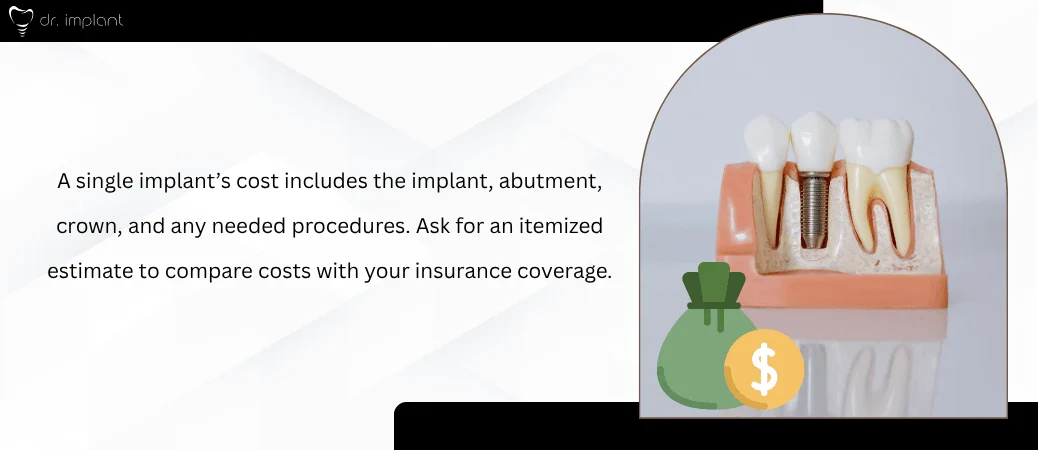
The total cost of a single implant depends on the implant placement, abutment, crown, and whether additional procedures such as bone grafting are needed.
Ask your dentist for an itemized dental implant cost estimate so you can compare each part of treatment with your insurance benefits.
How to Request a Predetermination Before Treatment Starts
A predetermination, sometimes called a pre-treatment estimate, can show how your insurer expects to apply benefits to a proposed treatment plan.
Your dental office may be able to submit the treatment information on your behalf, but the final benefit depends on your plan and eligibility at the time treatment is provided.
Can Treatment Be Phased Across Two Benefit Years?
If implant treatment naturally involves multiple stages, some procedures may fall into different benefit years.
Ask your dental team whether your clinical treatment timeline and insurance benefit periods overlap, but treatment timing should always be based first on what is appropriate for your oral health.
Using an FSA or HSA for Eligible Expenses
An FSA or HSA lets you pay for eligible implant expenses with pre-tax dollars, which effectively lowers your real cost.
Health savings accounts roll over year to year, while flexible spending accounts often have a use-it-or-lose-it deadline, so check your plan’s rules before setting aside funds.
Payment Plans, CareCredit, and Financing Options
When insurance does not cover the full cost of treatment, financing can help spread payments over time.
Available options may include CareCredit and in-house or third-party financing. Review the terms, payment schedule, and any applicable financing charges before choosing an option.
What to Compare When Evaluating Carrier Options
When comparing dental plans, review whether implants are included, the annual maximum, deductible, waiting period, network requirements, exclusions, and any alternative-benefit or missing-tooth provisions.
These terms can differ significantly between plans, so compare the actual policy documents rather than relying only on advertised benefits.
Verify Benefits Before Choosing an Implant Treatment Plan
Confirming your actual implant coverage before treatment starts is the single most useful step you can take to avoid billing surprises.
A pre-authorization or pre-treatment estimate gives you a written number from your insurer, rather than a guess based on your plan’s summary brochure.
Bring your treatment plan to this step, itemized by procedure code, so nothing gets bundled into a vague estimate.
Once you have that number, subtract it from the total quoted cost to see your realistic out-of-pocket costs.
Conclusion
Dental implant coverage rarely matches the full price of treatment, even under a generous-sounding policy.
The gap between what a plan promises and what it actually pays comes down to annual maximums, waiting periods, missing tooth clauses, and which specific procedure codes are included.
Verifying benefits in writing before surgery, exploring medical insurance when a medical cause applies, and lining up an FSA, HSA, or payment plan for the remainder gives you a realistic budget instead of a guess.
Frequently Asked Questions
Does dental insurance ever cover implants at 100 percent?
Complete coverage of dental implant treatment is not something you should assume from a policy that lists implants as a benefit.
Coverage can differ between the implant placement, abutment, crown, and preparatory procedures, and deductibles, annual maximums, and exclusions may affect your final benefit.
Will medical insurance cover dental implants if they are medically necessary?
Medical insurance may cover part of implant treatment when tooth loss results from trauma, oral cancer treatment, or a congenital condition like cleft palate.
Coverage requires documentation of medical necessity, including imaging and a treatment plan from an oral surgeon, and it’s decided case by case.
How can I find out if my dental plan covers implants?
Review your plan’s evidence of coverage and look for implant placement, crowns, major restorative services, exclusions, waiting periods, and annual maximums.
You can also ask your insurer for written benefit information based on your proposed treatment plan.
Can I buy dental insurance that covers implants immediately?
Some dental insurance plans have waiting periods for implant treatment or other major services, while others may have different eligibility requirements.
Review the policy’s effective date, waiting-period provisions, and implant benefits before purchasing a plan specifically for upcoming treatment.
How much does a single tooth implant cost without insurance?
The cost of a single-tooth implant varies based on the treatment required, materials used, and whether procedures such as bone grafting are needed.
An itemized treatment estimate can show your expected cost before insurance and help you determine your potential out-of-pocket amount.
How can I afford dental implants if insurance does not cover them?
If insurance does not cover the full cost of dental implants, you may be able to combine your available insurance benefits with an FSA or HSA and financing options such as CareCredit or available payment plans.
Review the terms of each option and your itemized treatment estimate before deciding how to finance your care.