If you’re missing most or all of your teeth, or you’re tired of dentures that slip and click when you talk, full-arch implants might be on your mind.
The question that usually comes up first isn’t about the procedure itself. It’s whether your age, your bone, or your health history will get in the way.
Understanding full-arch implant candidacy for seniors starts with looking at more than age. Age by itself almost never disqualifies someone from full-arch dental implants; what matters is bone density, gum health, and a few medical factors that a dentist can check in one visit.
A CBCT scan and a short conversation about your health history usually tell the whole story.
Whether you’re dealing with failing teeth, missing teeth, or years of frustration with removable dentures, this kind of tooth replacement is worth understanding before you decide anything.
Key Takeaways
- Age alone rarely rules out full-arch implants; bone density, gum health, and certain medications matter more.
- A CBCT scan shows exactly how much jawbone you have and whether bone grafting or All-on-4 fits your case.
- Fixed bridges and removable overdentures both restore function, but they differ in cost, care, and daily feel.
Are You a Candidate for Full-Arch Implants?
Most retirees qualify for full-arch implants once a dentist checks bone volume, gum health, and a handful of medical factors during an implant consultation.
Age shows up on intake forms, but it rarely changes the treatment plan on its own.
Why Age Alone Does Not Rule Out Treatment
A healthy 75-year-old often has better implant candidacy than a 50-year-old with uncontrolled gum disease.
Age alone is not a limiting factor as long as overall health and bone density are sufficient. What actually matters is how your body heals and whether your jawbone can support an implant.
That’s good news if you’ve been putting off treatment because you assumed you’d “aged out” of the option.
Many dental implants for seniors cases move forward without any special modifications tied to age at all.
How Healthy Gums and Gum Disease Affect Eligibility
Healthy gums give implants a stable foundation, while active gum disease has to be treated first.
Gum tissue holds the bone in place around your teeth and future implants, so infection or inflammation needs to be resolved before any implant surgery begins.
This isn’t a permanent roadblock. Many patients treat gum disease successfully and move forward with full-arch treatment a few months later.
Medical Conditions, Smoking, and Blood Thinners
Diabetes, osteoporosis, smoking, and blood thinners all affect planning, but few of them rule out treatment entirely.
Well-controlled diabetes rarely interferes with healing, and patients on blood thinners can often continue their medication with coordination between their physician.
Smoking slows healing and raises the risk of implant failure, so quitting (or cutting back) before surgery improves your odds of long-term implant success.
A thorough review of your medical history and current medications helps your dental team lower risk before the first cut is made, as outlined in this guide to dental implants with osteoporosis.
How Bone Density Shapes Your Treatment Plan
Bone density determines how many implants you need, where they’re placed, and whether bone grafting comes first.
Jawbone density naturally changes after tooth loss, which is why your treatment plan has to be built around your current anatomy, not a generic template.
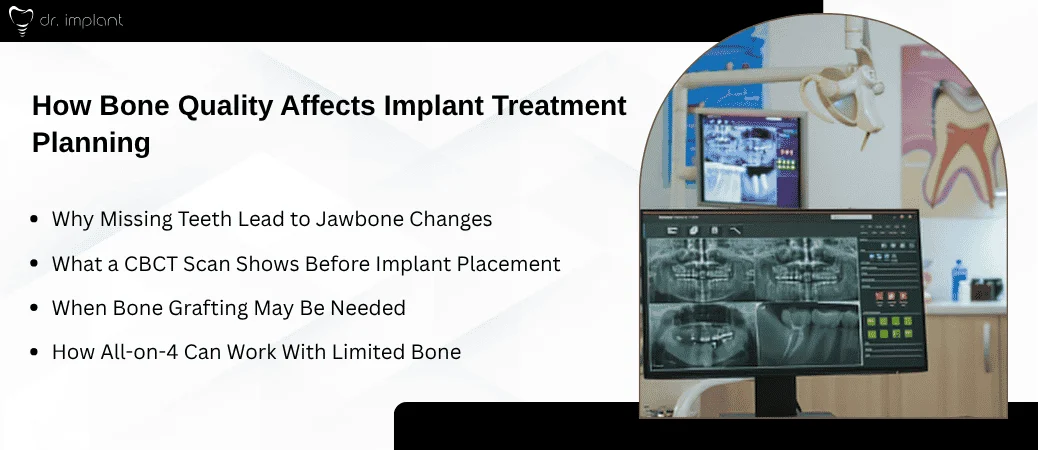
Why Missing Teeth Lead to Jawbone Changes
Your jawbone needs the pressure of chewing to stay strong, and missing teeth remove that stimulation. Over months and years, the bone in that area begins to shrink, a process dentists call bone loss.
This is common in patients who have worn dentures for a long time, since dentures rest on the gum and don’t transmit the same chewing pressure that natural teeth or implants do.
What a CBCT Scan Shows Before Implant Placement
A CBCT scan gives your dental team a 3D map of your jawbone, nerve pathways, and sinus location before any implant placement happens.
This cone beam scan shows how much bone is available in each area of your jaw. Your dental team can use this imaging alongside 3D surgical guides to plan implant placement based on your anatomy.
The scan also flags anatomy to work around, like nerve position or sinus depth. This step happens before you commit to any surgical plan, so you know what you’re working with beforehand.
When Bone Grafting May Be Needed
Bone grafting rebuilds jawbone volume when there isn’t enough for direct implant placement.
Many full-arch candidates have experienced significant bone loss over the years, and grafting material gives new bone tissue a foundation to grow on before implants go in, as explained in coverage of bone loss before dental implants.
Grafting adds time to the process, usually several months of healing before implants can be placed. It’s not required for every patient, but when it is, skipping it raises the risk of implant failure down the road.
How All-on-4 Can Work With Limited Bone
All-on-4 often avoids the need for bone grafting even in patients with some bone loss, because the implants are angled to use the density that’s already present.
Two implants go in vertically at the front of the jaw, where bone tends to be denser, and two more angle back to maximize contact with remaining bone toward the rear.
This approach lets many patients with moderate bone loss skip grafting altogether and move straight to implant placement.
Patients with more significant bone loss, unusual arch shape, or heavy bite forces sometimes need five, six, or more implants for added stability, a decision made after reviewing the CBCT scan and discussing the number of implants needed for full mouth restoration.
Which Full-Arch Tooth Replacement Option Fits Your Needs?
Fixed bridges and removable overdentures both replace a full arch of teeth, but they differ in stability, cost, and daily care.
The right choice depends on your bone volume, budget, and how you want your new teeth to feel day to day.
Fixed Bridges and Full Arch Replacement
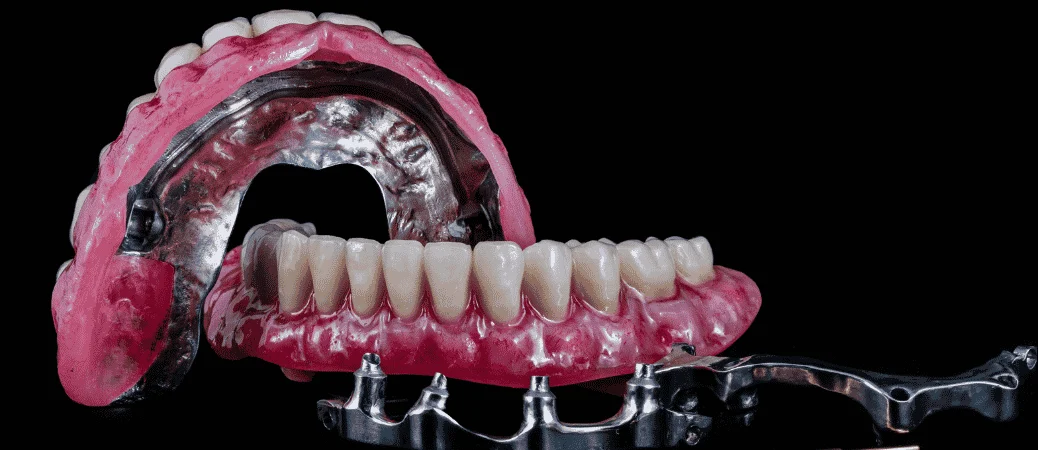
A fixed implant-supported bridge stays in your mouth permanently, anchored to implants and never removed for cleaning.
Full arch replacement with a fixed bridge gives you the closest experience to natural teeth, since there’s no adhesive, no slipping, and no nightly removal.
This option requires enough bone density to support several implants per arch. It’s the choice most patients prefer when their anatomy and budget allow for it.
All-on-4 vs. Additional Implant Support
All-on-4 uses four implants per arch to support a complete fixed bridge, while some patients benefit from five, six, or more implants for extra stability.
More implant support spreads chewing force more evenly across the jaw, which can help patients who grind their teeth or have strong bite forces.
Neither approach is automatically “better.” The decision comes down to bone quality, arch shape, and how your bite functions day to day.
How Implant-Supported Overdentures Compare With Traditional Dentures
Implant-supported overdentures anchor to two to four implants and snap securely in place, offering far more stability than traditional dentures that rest on the gum alone.
Traditional dentures rely on suction and adhesive, which can loosen over the course of a day and make eating certain foods difficult.
An overdenture still comes out for cleaning each night, but it won’t shift or click while you’re eating or talking.
For many retirees switching away from old-style dentures, this middle-ground option feels like a major upgrade without the cost of a full fixed bridge.
When a Removable Option May Make Sense
A removable overdenture makes sense when bone volume is limited, budget is a factor, or certain medical considerations favor a less invasive plan.
It anchors to implants using ball attachments or a bar, giving you a secure fit while still allowing removal for cleaning.
Feature****Fixed Bridge (All-on-4/X)Implant-Supported OverdentureTraditional DentureRemovable for cleaningNoYesYesImplants needed4 to 6+ per arch2 to 4 per arch0Stability while eatingHighestHighLowestBone volume requiredHigherModerateNoneDaily maintenanceBrushing, interdental brushesRemove nightly, clean attachmentsRemove, soak, reapply adhesive
Choosing between these paths is easier with a clear look at your CBCT scan and an honest conversation about your goals.
What to Expect From Surgery, Healing, and Long-Term Care
Full-arch implant surgery follows a predictable path: digital planning, placement, healing, then your final teeth.
Most patients are surprised at how manageable each stage feels once they know what’s coming.
How Digital Planning Guides Implant Surgery
Digital planning maps your bone, nerves, and sinuses before a single implant goes in. Your dental team designs the final restoration first, then works backward to determine exact implant positions.
Implant surgery itself is performed under local anesthesia using 3D surgical guides for precision, and many patients leave with a temporary set of teeth the same day.
Osseointegration and the Timeline for Final Teeth
Osseointegration is the process where implant posts fuse with your jawbone, and it takes three to six months to complete.
This biological bond is what makes the final restoration permanent and helps preserve bone rather than let it shrink further.
During this healing window, a provisional restoration lets you eat and speak normally while the fusion happens underneath.
Your permanent bridge or overdenture goes on only after this healing period, once your dental team confirms the implants are stable.
Caring for Fixed and Removable Implant Restorations
Fixed bridges need daily brushing plus tools like interdental brushes or a water flosser to clean around and underneath the restoration.
Removable overdentures come out nightly for cleaning, with special attention paid to the ball attachments that keep them secure.
Good oral hygiene habits protect your investment either way. Skipping cleaning under a fixed bridge is one of the more common paths to gum irritation and, eventually, implant failure.
Habits That Help Protect Your Investment
Regular dental visits, consistent home care, and quitting smoking (if applicable) all support long-term implant success.
Grinding your teeth at night is worth mentioning to your dentist too, since a nightguard can protect your new restoration from unnecessary wear, a topic covered in guidance on the maintenance of full mouth dental implants.
Choosing a Full-Arch Plan That Supports Your Future

The right full-arch plan comes down to your bone density, your health history, and how you want your daily life to feel.
Dental implants have come a long way, and full-arch dental implants in particular give retirees in Delray Beach a real path away from failing teeth or unstable dentures.
A CBCT scan and an honest conversation with your dental team answer most of the questions retirees bring into that first visit.
Whether the plan lands on a fixed bridge, an All-on-4 approach, or a removable overdenture, the goal stays the same: teeth that work reliably for years to come.
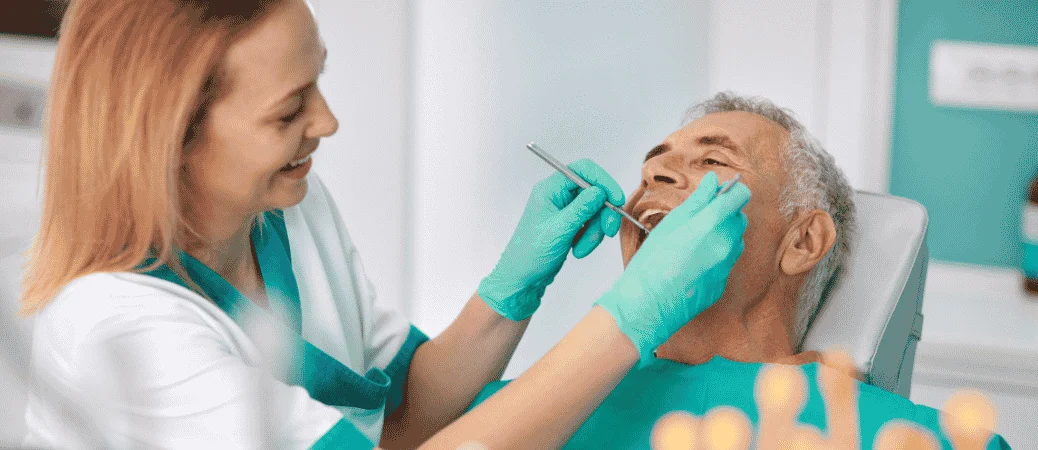
If you’re weighing your options, an implant consultation is the clearest next step. It’s the only way to see your own bone density, your own gum health, and your own realistic timeline, rather than a general estimate that may not apply to your case.
Frequently Asked Questions
Should a 70-year-old get full-arch dental implants?
Age at 70 does not rule out full-arch dental implants on its own. What matters is bone density, gum health, and overall medical history, all of which a dentist checks during a CBCT scan and consultation before recommending treatment.
Can I get full-arch implants if I have bone loss?
Bone loss does not automatically disqualify you from full-arch implants. All-on-4 often works around moderate bone loss using angled implant placement, while more significant bone loss may call for bone grafting first to rebuild the foundation.
Do blood thinners prevent full-arch implant surgery?
Blood thinners rarely prevent full-arch implant surgery outright. Your dental team coordinates with your physician to manage bleeding risk, and many patients continue their medication with a carefully planned surgical approach.
How long does healing take after All-on-4 treatment?
Osseointegration after All-on-4 treatment takes about three to six months, during which the implants fuse with your jawbone. A temporary restoration lets you eat and speak normally while healing progresses underneath.
Are implant-supported overdentures better than traditional dentures?
Implant-supported overdentures offer far more stability than traditional dentures, since they anchor to implants instead of resting on the gum alone.
They still come out for cleaning, but they won’t slip or click during eating and talking the way traditional dentures often do.