Getting a peri-implantitis diagnosis can feel scary, but it does not always mean your implant is doomed.
This condition causes inflammation and bone loss around your implant, and how far it has progressed makes a big difference in what happens next.
The good news is that many implants can be saved with the right treatment plan, especially when the problem is caught early.
Your dentist will look at things like how much bone you have lost, how deep your gum pockets are, and whether the implant is still stable before deciding on a treatment path.
Sometimes a deep cleaning is required to prevent infection after implant to calm things down.
Other times, you may need surgery to repair the bone and clean the implant surface, or in more serious cases, removal may be the safest option.
This guide walks you through what your diagnosis really means, how your dental team makes these decisions, and what your peri-implantitis treatment options look like at every stage.
You will learn what first-line care involves, when surgery might help, and how to tell if removal is truly necessary.
By the end, you will have a clearer picture of what to expect and how to improve your oral health going forward.
Key Takeaways
- A peri-implantitis diagnosis does not always mean you will lose your implant.
- Your treatment plan depends on how much bone loss and inflammation you have around the implant.
- Ongoing care and regular checkups help protect your treated implant and any future ones.
Table of Content
- What the Diagnosis Means for Your Implant
- How Your Dentist Decides Whether the Implant Can Be Saved
- First-Line Care to Control Infection and Inflammation
- Surgical Options That May Preserve the Implant
- When Implant Removal Is the Safer Choice
- Protecting Treated and Future Implants Long Term
- Frequently Asked Questions
What the Diagnosis Means for Your Implant
Getting a diagnosis can feel scary, but knowing what it means helps you make good choices for your treatment.
Your dentist will look at your gum tissue, check for bone loss, and watch for warning signs that tell them how serious the problem is.
Peri-Implant Mucositis vs. Peri-Implantitis
Your dentist may use two different terms when talking about problems around your implant, and knowing the difference matters a lot.
Peri-implant mucositis is inflammation of the soft tissue around your implant, but the bone underneath is still healthy. It’s the milder of the two peri-implant diseases, and it can usually be reversed with good care.
Peri-implantitis is more serious. It means the inflammation has spread deeper, and you’re now dealing with bone loss around the implant.
Your dentist will likely take an x-ray to confirm the diagnosis and see how much bone has been affected. Once bone loss shows up, treatment becomes harder and more urgent.
How Bone Loss Affects Implant Stability
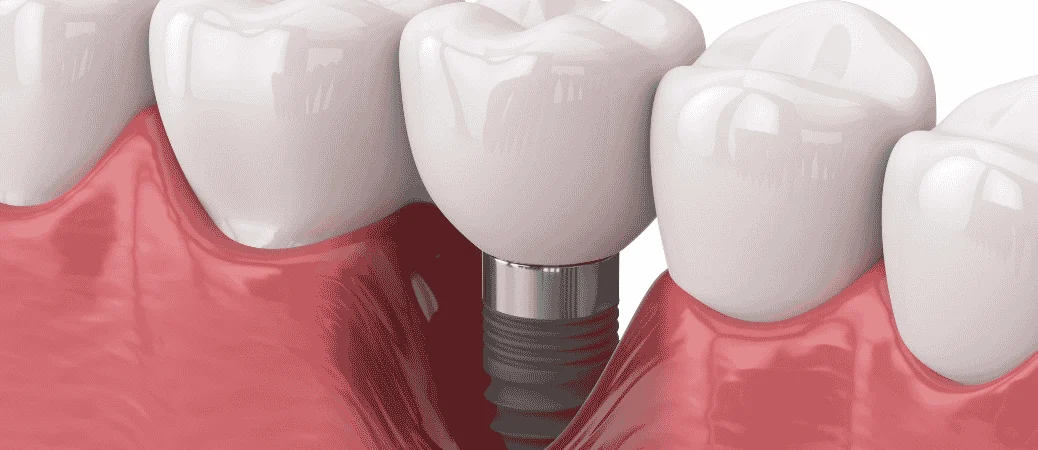
Your implant relies on a process called osseointegration, where the metal post fuses directly with your jawbone. This fusion is what keeps your implant stable and able to handle chewing forces every day.
When peri-implantitis causes bone loss, that fusion starts to break down. Less bone support means less stability, and over time, your implant can loosen.
This is one of the more common biological complications dentists watch for after implant placement.
The amount of bone loss usually determines your treatment options. Mild bone loss might respond to non-surgical care, but advanced loss often needs surgery, and in some cases, the implant may need to be removed if it can’t be saved.
Symptoms That Need Prompt Attention
Some symptoms mean you shouldn’t wait to see your dentist. Bleeding on probing (BoP) is one of the clearest early signs, meaning your gums bleed easily when gently checked.
Your dentist also measures probing pocket depth (PPD) around the implant. Deeper peri-implant pockets often mean more advanced disease and a higher chance of bone loss.
Watch for these signs between visits:
- Red or swollen gums around the implant
- Bleeding when you brush or floss
- Pus or discharge near the implant
- Any looseness or shifting of the implant
If you notice any of these, don’t wait for your next checkup. Getting early treatment for implant symptoms gives you the best shot at saving your implant before the damage gets worse.
Download our Dental Implant Pricing & Information Guide!
Fill Out The Form Below And We Will Email/Text You The Guide Along With A $350 Savings Offer.
The Guide Will Show You
-
Factors That Affect Eligibility -
Dental Implant Options -
Average Pricing -
And More!
Download our Dental Implant Pricing & Information Guide!
Fill Out The Form Below And We Will Email/Text You The Guide Along With A $350 Savings Offer.
How Your Dentist Decides Whether the Implant Can Be Saved
Your dentist looks at several clues before deciding on a treatment plan. These include how deep the infection goes, what shape the bone damage takes, and your overall health history.
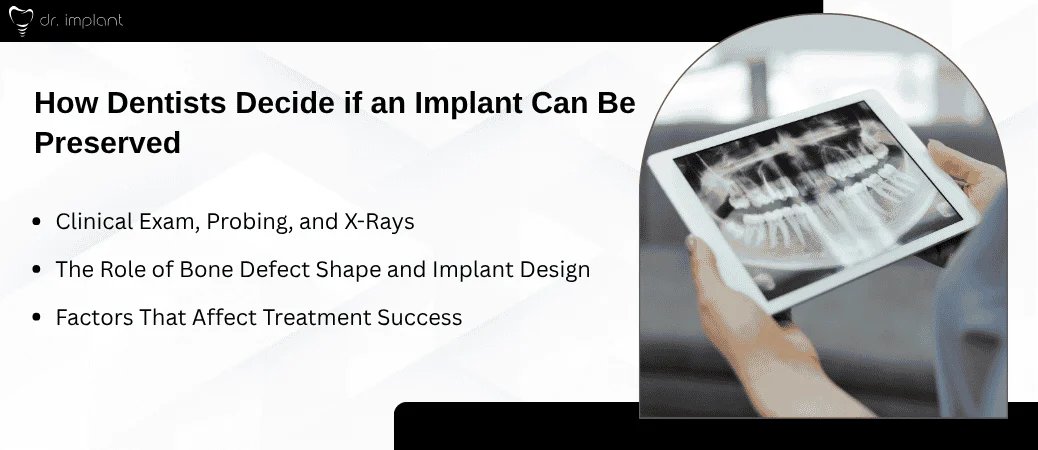
Clinical Exam, Probing, and X-Rays
Your dentist starts with a hands-on exam. They use a periodontal probe to check probing depths around your implant. A healthy implant usually has shallow pockets.
Deeper probing pocket depth often means the infection has spread further into the bone.
Your dentist also checks for bleeding on probing. This happens when the tissue around your implant bleeds after gentle contact with the probe. Bleeding is a sign of active inflammation, even if you don’t feel any pain.
X-rays show your dentist how much bone loss has happened. They can compare current images to older ones taken when your implant was first placed.
At Dr. Implant, our implant team evaluates the extent of infection, bone loss, implant stability, and your overall oral health before recommending peri-implantitis treatment.
The goal is to determine whether the implant can be safely preserved and which treatment approach gives it the best chance of long-term stability.
Our expert doctors carefully evaluate each case to recommend the most appropriate path forward
The Role of Bone Defect Shape and Implant Design
The shape of the bone loss matters a lot. An intrabony defect is a hole in the bone that has walls on some or all sides. These defects often respond better to treatment because the surrounding bone can help support healing.
Bone loss that circles the entire implant, without walls to contain it, is harder to treat. Your dentist will also look at the implant threads and how exposed they are.
More exposed threads usually mean more advanced bone loss.
Implant length and width matter too. Narrow-diameter implants may have less bone contact to begin with, so they can be more sensitive to bone loss.
The type of implant-supported prostheses attached to your implant can also affect how easy it is to clean and treat the area.
Factors That Affect Treatment Success
Your personal health plays a big role in treatment success and implant survival. Your dentist will ask about:
- Smoking: This slows healing and increases the risk of treatment failure.
- Diabetes: Poorly controlled blood sugar can make infections harder to fight off.
- Osteoporosis: This can affect bone density and healing around the implant.
- History of periodontitis: If you’ve had gum disease before, you may be more likely to develop problems around implants too.
Your dentist will also think about how well you can maintain daily oral hygiene at home. All of these factors help your dentist figure out the best path forward for saving your implant.
First-Line Care to Control Infection and Inflammation
The first step in treating peri-implantitis focuses on getting rid of bacterial plaque and calming down the inflammation around your implant.
This usually means a mix of professional cleaning, better habits at home, and sometimes extra help from mouthwash or antibiotics.
Professional Cleaning and Mechanical Debridement
Your dentist will start with non-surgical treatment to clean the area around your implant. This involves mechanical debridement, which means removing plaque and hard deposits from the implant surface.
Special tools are used so they don’t scratch or damage the implant. Many dentists now use glycine powder in an air-polishing device.
This gentle powder cleans deep pockets without harming the implant surface.
Your dentist may also check for leftover cement under your gums. Cement left behind from when your crown was placed can trap bacteria and make things worse.
Removing it is often a key part of getting your implant back to health.
Improving Plaque Control at Home
Good oral hygiene at home makes a big difference in how well your treatment works. Your dentist will likely show you specific ways to clean around your implant, since it can be trickier than cleaning natural teeth.
Flossing daily is still important, but you might need special tools too. These can include:
- Interdental brushes made for tight spaces
- Water flossers to clean below the gumline
- Soft-bristled brushes to avoid irritating your gums
Sticking to a regular cleaning routine helps keep bacterial plaque from building back up. Skipping even a few days can let inflammation creep back in.
Your dentist can help you build a routine that fits your lifestyle and your implant’s needs.
When Chlorhexidine or Antibiotics May Help
Sometimes cleaning alone isn’t enough to fully calm the infection. In these cases, your dentist might recommend a chlorhexidine mouthwash to help reduce bacteria levels around the implant.
This antimicrobial rinse is often used for a few weeks after your cleaning appointment. It’s not meant for long-term daily use, since it can stain your teeth over time.
If the infection is more stubborn, your dentist may add antibiotics to your treatment plan. This kind of antimicrobial therapy is usually paired with mechanical debridement, not used on its own.
The goal is to bring down inflammation enough that your gums can start to heal and reattach to the implant.
Surgical Options That May Preserve the Implant
If your dentist thinks your implant can be saved, you may be looking at surgery to clean the implant surface, reshape bone, or add tissue back where it’s been lost.
Each option targets a different part of the problem, from bacteria on the implant threads to bone that’s worn away underneath.
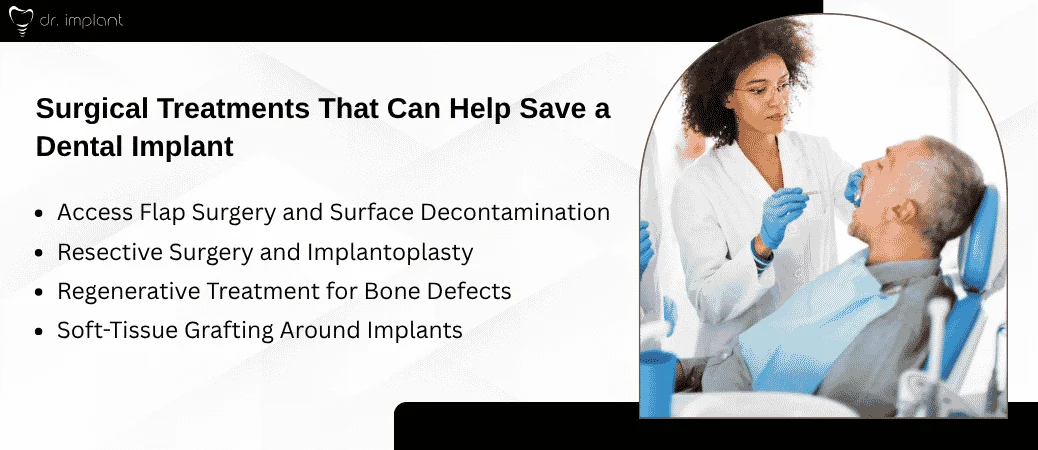
Access Flap Surgery and Surface Decontamination
Access flap surgery is often the first step in surgical treatment of peri-implantitis. Your dentist lifts back your gum tissue to get a clear view of the implant and the bone around it.
This lets them remove infected tissue and clean off the biofilm that’s built up on the implant surface. Cleaning tools can include lasers, EDTA rinses, or special brushes designed for titanium surfaces.
Good implant surface decontamination matters a lot here. If bacteria are left behind, the infection can come right back.
Resective Surgery and Implantoplasty
Sometimes cleaning alone isn’t enough, so your dentist may also reshape the bone or smooth the implant itself. This is called resective surgery, and it often includes a step called implantoplasty.
During implantoplasty, your dentist polishes down the exposed implant threads. Smooth threads make it harder for bacteria to stick around, which can help lower your risk of the infection returning.
That said, this method has some tradeoffs. Studies show it may lead to more gum tissue pulling back around the implant, which can affect how your smile looks, especially on front teeth.
Regenerative Treatment for Bone Defects
If you’ve lost a good amount of bone around your implant, your dentist might recommend a regenerative approach instead.
The goal here is to rebuild that lost bone rather than just reshape what’s left.
This usually means placing a bone graft material into the empty space, often deproteinized bovine bone mineral mixed with 10% collagen.
Sometimes a collagen membrane goes over the graft to help protect it while it heals.
This works best in what’s called an intrabony defect, which is basically a deep, narrow pocket of missing bone. Wide, shallow bone loss doesn’t respond as well to grafting.
Soft-Tissue Grafting Around Implants
Healthy soft tissue around your implant does more than look nice. A good band of thick, firm gum tissue helps protect the implant from bacteria and future infection.
If you don’t have enough of this tissue, your dentist may take a small graft from another spot in your mouth, often the roof of your mouth, and place it around the implant.
This helps cover exposed areas and gives the implant a sturdier collar of tissue.
Soft-tissue grafting is often done alongside bone grafting rather than by itself. Combining the two gives your implant a better shot at long-term stability, since both the bone and the tissue around it need to be healthy for the implant to last.
When Implant Removal Is the Safer Choice
Some implants can be saved with deep cleaning or gum surgery. Others have too much damage, and keeping them in place puts your health at risk.
Signs That the Implant Has a Poor Prognosis
Your dentist looks at a few key things to decide if an implant should stay or go. Deep peri-implant bone loss is one of the biggest red flags.
Extensive bone loss around the implant can significantly reduce the chances of successfully saving it.
Implant stability matters too. A stable implant feels solid when your dentist checks it. Research shows that implant mobility is an important sign of a poor prognosis.
Your dentist will consider the severity of bone loss, implant stability, age, and esthetic needs when deciding whether removal is appropriate.
Other warning signs include:
- Pus or ongoing infection that will not clear up
- Pain that keeps coming back
- Gum pockets deeper than 6mm around the implant
- Bone loss that keeps getting worse despite treatment
What Happens During Removal and Site Healing
Your dentist will numb the area first, so you should not feel pain during the procedure.
There are a few ways to take out an implant, but the reverse torque technique is often the first choice because it causes less damage to the bone around it.
After removal, your dentist checks how much bone is left. Bone grafting may be needed to rebuild areas damaged by peri-implant disease.
This helps create a strong base if you want a new implant later.
Healing time varies from person to person. Most people need a few months for the bone to heal and, if grafting was done, for bone regeneration to finish before any new treatment starts.
Planning Replacement or Alternative Tooth Support
Once your site has healed, you have choices. A new implant is one option, but success depends on your bone health and habits like smoking.
Studies show implant survival rates drop after a second placement, so your dentist may recommend fixing risk factors first, like smoking or uncontrolled blood sugar.
Bridges or partial dentures are other options if another implant is not the best route. For a fully edentulous patient, prosthetics can still work well, even if one implant had to be removed.
Your dentist will walk you through the pros and cons of each choice. The right option depends on your bone quality, overall health, and what feels right for your daily life.
Protecting Treated and Future Implants Long Term
Keeping your implant healthy after treatment comes down to a few key habits: staying on top of dental visits, cleaning properly every day, and managing health conditions that raise your risk.
Here’s what you need to know to keep your implant working for years to come.
Supportive Care and Regular Monitoring
Your dentist needs to check your implant regularly, even after treatment clears up. This is called supportive care, and it’s one of the biggest factors in long-term implant success.
At each visit, your dentist will check your probing depths and look for bleeding on probing.
Both signs tell them whether inflammation is coming back before you even notice symptoms.
You’ll also get a professional cleaning to remove bacterial plaque that builds up in spots you can’t reach at home.
Most people need these visits every three to six months, but your dentist may want to see you more often if you’ve had peri-implantitis before.
Research shows that personalized care plans work better than one-size-fits-all schedules. Skipping these visits raises your risk of the problem coming back.
Daily Cleaning Habits That Matter
What you do at home matters just as much as your dental visits. Plaque control is the foundation of peri-implant health, and it starts with brushing twice a day around your implant.
Flossing matters too, but you need the right technique. Regular floss can miss tight spaces around implants, so ask your dentist about implant-specific floss or small interdental brushes that clean between the implant and your gum.
Water flossers can help remove debris from areas you might miss otherwise. Your dentist may also recommend an antimicrobial rinse to reduce bacteria that cause inflammation.
Skipping even a few days of proper cleaning lets plaque harden into tartar, which is much harder to remove and increases your risk of gum irritation around the implant.
Managing Smoking, Diabetes, and Gum Disease
Some health factors make implant problems more likely, and it helps to know what you’re up against.
Smoking is one of the biggest risks because it reduces blood flow to your gums, which slows healing and weakens your body’s ability to fight infection.
Diabetes also raises your risk, especially if your blood sugar isn’t well controlled. High blood sugar makes it harder for your gums to heal and fight off bacteria.
If you have a history of periodontitis or gum disease, you’re more likely to develop problems around implants too. That’s because the same bacteria that cause gum disease can affect the tissue around your implant.
Working with your doctor to manage diabetes, and talking to your dentist about quitting smoking, can meaningfully improve your odds of keeping your implant.
Studies, including randomized clinical trials, consistently link these health factors to implant survival rates.
Frequently Asked Questions
You probably have a lot of questions if you’ve just been told you have peri-implantitis. Here are answers to the most common ones about spotting the problem, treating it, and knowing when your implant might not be able to be saved.
What are the signs and symptoms of peri-implantitis?
You’ll usually notice red or swollen gums around your implant first. Your gums might also bleed when you brush or floss, which is one of the early signs of peri-implant disease to watch for.
As the condition gets worse, you might feel some looseness in the implant. Pus or a bad taste in your mouth can also show up if the infection has spread further into the bone.
Can peri-implantitis be reversed without removing the implant?
Yes, in many cases you can treat peri-implantitis without losing your implant. Your chances are much better if you catch it early, since early diagnosis and treatment tend to lead to better outcomes.
If the disease is caught before it causes too much bone loss, your dentist can often stop it from progressing. Waiting too long makes it much harder to save the implant.
What treatments can help save an implant affected by peri-implantitis?
Your dentist will likely start with non-surgical options first. These include mechanical debridement and antimicrobial treatments like chlorhexidine rinses or gels to clean out bacteria around the implant.
If the infection doesn’t clear up, surgery might be the next step. Your dentist could use bone grafts to rebuild lost bone, smooth out the implant surface, or use surgical techniques like implantoplasty to remove damaged threads and polish the implant.
When does an implant need to be removed because of peri-implantitis?
Sometimes the damage is just too severe to fix. If you’ve lost a large amount of bone around the implant, or if the implant has become loose and unstable, removal may be your best option.
Your dentist will also consider taking the implant out if non-surgical and surgical treatments haven’t stopped the infection.
At that point, keeping the implant in place could risk more bone loss or spread the infection to nearby teeth.
How quickly can peri-implantitis progress if left untreated?
Peri-implantitis can move faster than you might expect. Unlike natural teeth, implants don’t have the same protective structures, so infection can spread through the bone more quickly once it starts.
This is why regular checkups matter so much. Catching the problem while it’s still in the early mucositis stage gives you a much better shot at treating it before it turns into full peri-implantitis.
Can antibiotics or at-home care treat peri-implantitis?
Antibiotics can help, but they usually work best as part of a bigger treatment plan rather than on their own.
Your dentist might prescribe them after cleaning out the area to help control the infection before trying other treatments. At-home care matters too, but it’s not a stand-alone fix once the disease has set in.